Energy efficiency key to reaching climate goals
The Norwegian Shipowners’ Association is calling on authorities to prioritize energy efficiency in the existing fleet to secure rapid emission cuts.
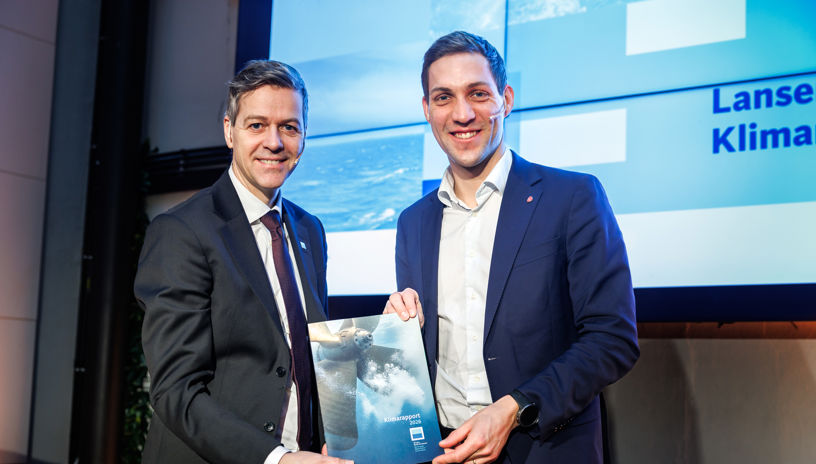
CEO Knut Arild Hareide presents the Minister for climate and environment, Andreas Bjelland Eriksen, with the Norwegian Shipowners' Association's Climate Report 2026.
Geopolitics is slowing climate progress
“Great power rivalry and weakened international cooperation had direct consequences for climate progress last year. In October, the UN’s International Maritime Organization (IMO) failed to agree on a new global climate framework for shipping,” says CEO of the Norwegian Shipowners’ Association, Knut Arild Hareide.
In 2025, the association’s member fleet—around 1,500 ships and rigs—accounted for total emissions of 24.7 million tonnes of CO₂ equivalents.
“Shipping is inherently global. Effective emission cuts require global regulation. Fragmented national and regional measures increase complexity, drive up costs, and ultimately weaken climate impact. What we need is a unified global framework—not a patchwork,” Hareide says.
Climate goals depend on energy efficiency
“To reach our climate goals, we must accelerate emission reductions by improving energy efficiency across the existing fleet,” says Hareide.
He warns against overly narrow policy approaches:
“When policy instruments are designed to favor specific zero-emission solutions, we risk delaying real progress. Governments should not attempt to pick winners, but instead enable measurable emission reductions—starting with what can be achieved here and now through energy efficiency. This must be a priority in the 2027 national budget.”