Avansert søk
sok

Nøkkelord

Næringspolitikk
Internasjonal politikk
Miljø
Samfunnsansvar
Sikkerhet
Kompetanse
Short sea
Deep sea
Offshore
Beredskap
Innovasjon
Jus

Tema

Fra land til sjø
Pirattrusselen
Privat eierskap
Norsk sokkel

Tidsperiode

Lukk
Avansert søk

EMIP

The project Energy Management In Practice phase II project had its kick off September 26-27 2011. The project builds upon the results from the EMIP I project and major emphasis is put on practical implementation. The project is supported by the Norwegian Research Council and aims to make a contribution towards the NSA environmental vision “Zero harmful emissions to air and sea” and implementation of the Maritime 21 strategy.

The EMIP 2 project

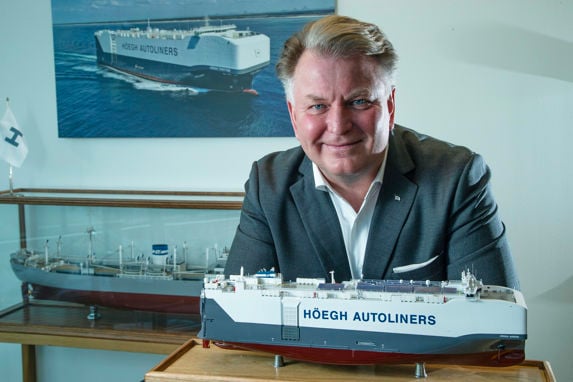
The EMIP 2 project (Energy Management In Practice) is the seamless continuation of the original EMIP project which was completed in May 2011. The project is controlled by the WG 5 cooperation. WG 5 is the cooperation now consisting of 6 shipping companies Torvald Klaveness AS, Höegh Autoliners AS, Wilhelmsen Lines AS, BW Gas AS, Grieg Shipping AS and Solvang ASA. In addition to the WG 5 companies, the project has joined forces with the research institute MARINTEK, the Norwegian University for Science and Technology (NTNU) and the equipment suppliers Marorka and Kongsberg Maritime.

The EMIP 2 project seeks to reduce fuel consumption and thus CO2 emissions through improving energy efficiency for ships in a practical and cost effective way.

Project description

The EMIP 2 project is a UIP project (User controlled Innovation Project) supported by the Research Council of Norway. The budget of the project is 10,5 MNOK and the execution of the project is planned in the period September 2011 to September 2013. The project management is executed by representatives from the participating shipping companies (Klaveness, Wilhelmsen, Höegh, BW Gas, Grieg Shipping and Solvang).

Effect goal

The main goal of the project, i.e. the reason for why doing the project, is stated in the project's effect goal;

"To utilize, strengthen, enhance  and  sustain  the developed EMIP platform through stronger inclusion of R&D institutions and industry actors enabling a robust knowledge and innovation platform related to energy efficiency on ships, with rational utilization of limited resources and a strong focus on verification of practical energy efficiency measures, contributing to increasing Norwegian shipping's competitive edge and environmental performance"

Result goal

The result goals, i.e. what shall be delivered to what time and to what budget, are as follows;

  1. Identify, test, integrate and develop sensors yielding improved measuring accuracy related to energy efficiency on ships
  2. Implement results from the 200840/I40 EMIP project, related to developed training programs for crews, procedures and verification of measures
  3. Enhance decision support functionality installed on nominated test ships and build a robust ship-shore reporting system enabling improved capability for shore organization follow up
  4. Establish a database for scientific analysis and systematic follow up of energy efficiency measures on ships and perform studies related to improved energy efficiency of ships in seaway
  5. Further develop knowledge related to energy efficiency on ships by including 3 Master of Science students to the project, establish courses in the topic at NTNU and publish articles related to the project in scientific journals, popular science magazines and in the media in general

Project plan

Based on work within the group ahead of and during the kick-off in the project, a work breakdown structure (WBS) has been developed, showing the total scope of work. This has been used to estimate the need for resources and the project's total time frame. The WBS structure is used in all aspects of managing the project; cost, time, quality and handling of uncertainties. EMIP consists of seven subprojects, namely;

WBS 1 Project Management

 WBS 2 Sensors/improved accuracy

WBS 3 Implementation of EMIP platform

WBS 4 Performance monitoring system

WBS 5 Data analysis and technology qualification

WBS 6 Knowledge generation

WBS 7 Action plan and further work

Detailed WBS structure is available here.

Time schedule

The schedule is a starting point and is being used in a dynamic manner. The project will be tuned to the dependencies between various activities and is directed towards project termination in September 2013.

Project organization

It is a considerable challenge in many projects that its participants are allocated to a range of other activities. This is also the case in the EMIP 2 project where ten different organizations with ten different cultures are working together and all project participants have their regular duties in their respective companies. Bearing this in mind, the project has used some resources to establish a project culture to strengthen the ability for implementation. A cooperation matrix is under development and shall identify which people are allocated to which subprojects and which people have been appointed leaders of the subprojects.

The project responsible for EMIP 2 is Bent Martini in Klaveness while the project manager is Aage O Langeland in Grieg Shipping Group. The project manager reports to the project responsible and EMIP’s project board consists of senior staff/managers from WG 5.

EMIP 2 has the following subproject managers;

WBS 2 Sensors/improved accuracy: Sam Holvik (Høegh)
WBS 3 Implementation of EMIP platform Christoffer Bøhmer (Klaveness)
WBS 4 Performance monitoring system:    Petter Jønvik (Wilhelmsen)
WBS 5 Data analysis and technology qualification: Brage Mo (Marintek)
WBS 6 Knowledge generation:  Tor Øyvind Ask (Solvang)
 WBS 7 Action plan and further work:   Aage Langeland (Grieg)


 News

News and status reports will be put on the left side at this page.


Project status Ongoing
Project manager Aage O. LAngeland tlf. 55  57 69 50


Publiseringsdato: 12/22/2011